
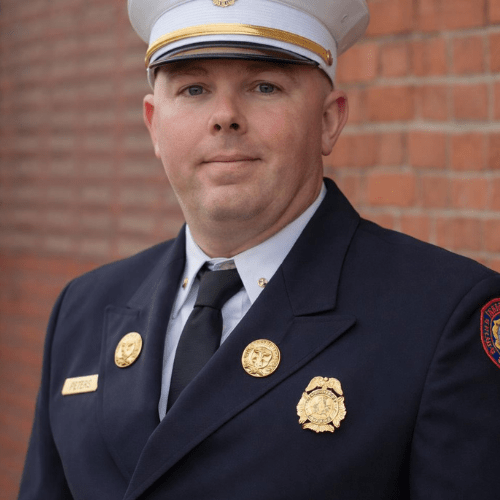
Senior Consultant
Energy Safety Response Group
Glastonbury, CT
Shawn Morris is a Senior Consultant with Energy Safety Response Group, providing technical assistance, emergency planning, and responder training for Battery Energy Storage Systems (BESS) across North America. His investigative and failure analysis experience includes involvement in major BESS and lithium-ion battery fire incidents.
With more than 25 years in the Connecticut Fire Service, Shawn currently serves as a Deputy Fire Chief in Fairfield County. He is an IAAI Certified Fire Investigator and NAFI Certified Fire Investigation Instructor, with extensive experience in fire origin and cause investigations and instructional leadership.
Shawn also serves with ESCI, the consulting arm of the International Association of Fire Chiefs, supporting fire departments and municipal agencies with operational and technical challenges. He has taught at Trinity College and Post University and is currently pursuing a doctorate in Fire Construction and Emergency Management at Oklahoma State University. He holds a Master of Public Administration from the University of Connecticut and received the UConn School of Public Policy Distinguished Alumni Award in 2024.