
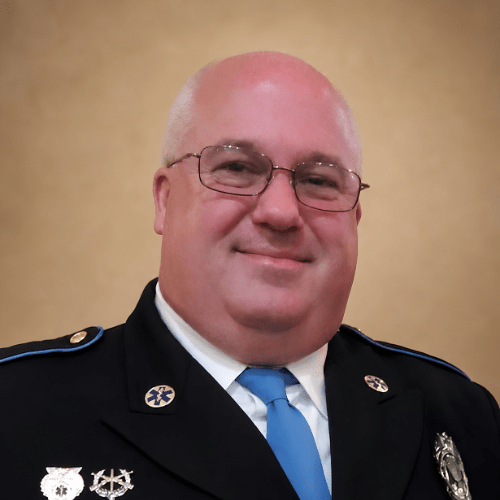
Assistant Director of Simulation
Mercer University School of Medicine
Savannah, GA
Joe Slattery serves as the Assistant Director of Medical Simulation for the Mercer University School of Medicine. With more than 30 years of experience in EMS as an EMT and paramedic, Joe bridges the gap between frontline emergency medicine and advanced clinical education. He holds a Bachelor of Science in Homeland Security and Emergency Management and is currently pursuing a Master of Science in Healthcare Organizational Leadership, further enhancing his expertise in managing complex educational systems and supporting institutional growth.
Throughout his career, Joe has been instrumental in developing and implementing simulation programs across the healthcare spectrum, including EMS, nursing, medical education, and residency programs. As a Simulation Operations Specialist and Educator, he is driven by a passion for healthcare simulation and a commitment to providing others with the resources and knowledge needed to enhance their simulation practices.
Joe remains dedicated to utilizing innovative simulation strategies and effective leadership to improve provider competency, strengthen education, and ultimately enhance patient outcomes.
In a market saturated with high-cost, “off-the-shelf” solutions, simulation specialists often find themselves choosing between budget-breaking trainers and a lack of realism. However, the most effective EMS training tools are not always found in a catalog; they are often built on a workbench.
This session explores the art and science of “Simulation MacGyvering”—the process of designing, prototyping, and building custom task trainers tailored to specific EMS objectives. We will discuss and demonstrate how to leverage hardware store materials and clinical waste to create cost-effective, high-impact, and durable training solutions.
Stop waiting for a vendor to solve your training gaps and start building the tools your providers actually need.
The gap between a simulation lab and the back of a moving ambulance can feel like a canyon. To bridge that gap, EMS educators must be more than just operators; we must become masters of experiential learning.
Join me for a deep dive into the art and science of healthcare simulation. We will explore how to anchor training with clear objectives and close the loop with effective debriefing strategies that create lasting impact.
Elevate your agency’s training from simple practice to a pathway for professional growth and success.