
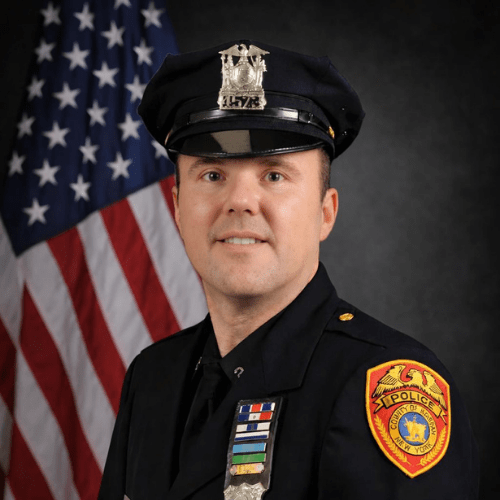
Police Officer/Paramedic
Suffolk County Police Department
Huntington, NY
James Garside began his EMS career in 1986 when he joined his local volunteer ambulance corps while still in high school, where he continues to serve today. His very first call as an EMT—a cardiac arrest—inspired him to pursue advanced life support. He became certified as an AEMT-3 (EMT-CC) in 1990 and earned his paramedic certification in 2022.
After seven years as a police officer, Garside combined his medical training with his law enforcement responsibilities. In 2000, he became one of the first officers in Suffolk County to carry Advanced Life Support (ALS) equipment in his patrol vehicle. For more than three decades, he has responded to medical emergencies as an additional ALS resource, supporting local volunteer EMS agencies throughout the region.
In recognition of his exceptional service and commitment to prehospital care, Garside was named Suffolk County Regional EMS Council ALS Provider of the Year in 2000 and 2011 and received the New York State EMS Council ALS Provider of the Year Award in 2012.
Alcohol use is deeply woven into first responder culture, yet its impact on clarity, decision-making, fatigue, and mental health is rarely addressed openly within EMS and fire services. This session examines how routine alcohol use—both on and off shift—can affect cognitive performance, sleep quality, emotional regulation, burnout, operational readiness, and long-term wellness.
Drawing from lived experience, emerging research, and the development of the Zero Proof Hero movement, this program offers a practical, non-judgmental look at how alcohol culture influences provider performance in real-world settings. Attendees will explore why many responders underreport drinking habits, how alcohol can contribute to performance inconsistencies and preventable errors, and why even “normal” drinking patterns may quietly impact resilience and daily readiness.
The session provides clear, realistic strategies that first responders can begin using immediately—without requiring drastic lifestyle changes—to improve clarity, decision-making, and day-to-day performance. This presentation is designed for EMS providers, firefighters, educators, leaders, and instructors seeking to strengthen crew culture, reduce burnout, and enhance operational consistency.
The focus is practical, relatable, and highly relevant to the wellness and performance challenges currently facing the first responder community.