
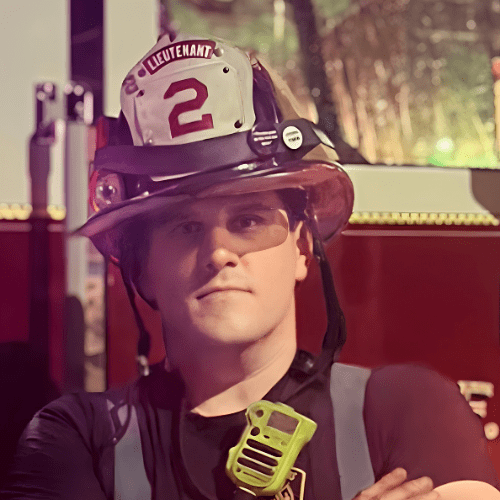
Robert Kiel Samsing

Lieutenant

Newport News Fire Department
Newport News, VA


Kiel Samsing is a firefighter, paramedic, neuroscience coach, and author. He serves as a Lieutenant with the Newport News Fire Department and brings nearly 20 years of experience in the fire and EMS profession. Kiel has taught nationwide on topics including firefighting, decision-making, and leadership. He is the author of Mind of Fire: The Science and Art of Decision Making, a book focused on improving decision-making under pressure by applying principles from neuroscience and human performance. He uses his expertise to help individuals and organizations better understand decision-making, leadership, and performance in high-stress environments.

Ambulance Accident Case Review (Friday, October 23, 2026 - 3:15-4:30pm)
“Ventilation can make or break the outcome of a fire. Successful execution requires an understanding of how it works and the precautions that must be taken. This class defines ventilation and its relationship to fire dynamics, firefighting operations, and, most importantly, victim survivability. A universal framework is provided that is applicable to any environment—from the smallest rural town to the largest metropolitan city. With a practical understanding of ventilation, participants can streamline their size-up and decision-making processes while enhancing their overall performance. By rapidly assessing conditions, prioritizing objectives, and intervening in the most impactful manner, ventilation can be leveraged to its full potential.”
“Trauma care in rural environments presents unique challenges related to geography, resource availability, extended transport times, and coordination among multiple responding agencies. This case-based presentation reviews four complex rural trauma incidents that required rapid assessment, critical decision-making, and coordinated prehospital and hospital responses. Through detailed review of these cases, participants will examine the operational, clinical, and logistical factors that influence patient outcomes when managing severely injured patients in resource-limited settings. Emphasis will be placed on early identification of patients requiring transport to a Level I Trauma Center, appropriate utilization of air medical resources, landing zone management, extrication considerations, and the impact of deteriorating patient conditions during transport. The presentation highlights the importance of a coordinated “team approach” involving EMS, fire services, air medical crews, and trauma centers, while exploring the consequences of delayed decisions, communication breakdowns, and system limitations. Designed for EMS providers, supervisors, and trauma stakeholders, this session reinforces the importance of an organized trauma system and evidence-informed transport decisions to improve outcomes for rural trauma patients in Kentucky and similar environments.”